
So, what really is a Stage 1 Remap?
In a nutshell, it’s a rewrite of a control unit’s internal parameters. It’s a bit like overclocking a computer.
Torque is what an engine actually makes
Firstly, you need to understand that horsepower is related to torque. And torque is what engines produce. It’s also the parameter that an engine measures. Horsepower is proportionate to torque and engine RPM – which is a whole other topic.
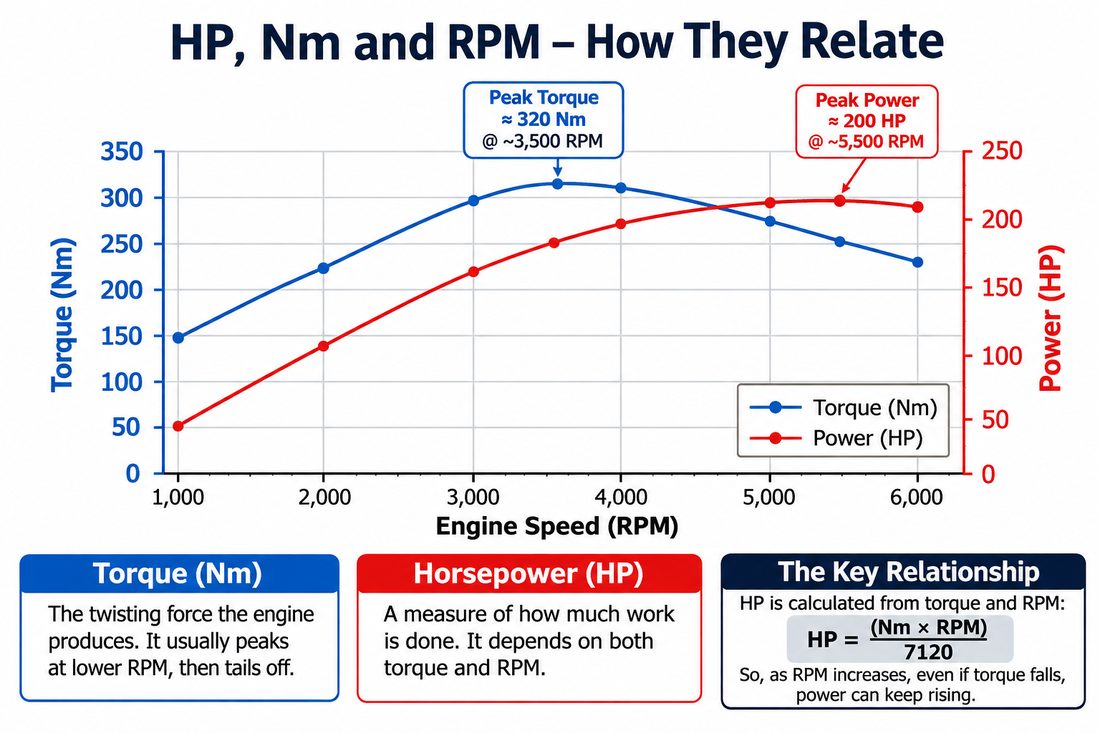
So, when you are driving your car, and you apply any amount of throttle you are asking the engine for more torque. This is what’s known as torque demand. If you watch any form of motor racing, you might have heard of it. Depending on what gear you’re in, what the current engine load is and how much you apply the throttle will determine what that torque is. These are numbers that are contained within a map (you can see where this is going!).
Usually, the higher the gear, load, and throttle, the higher the torque demand will be.
So why not just turn the numbers up?
It’s simple, right? Up those numbers and you’re away? Well no. There’s a lot more to it than that.
It’s fine asking an engine to give more torque, but it needs to know how to do it. Engines need fuel, air, and a source of ignition. In petrol engines it’s a spark plug, in diesel engines it’s the heat from compression.
The more torque you ask for, the more fuel and air it needs – these are often the limiting factors that move you from a stage 1 to a stage 2 tune and beyond.
The headroom is already built in
Now for the fun bit. Within factory ECU’s they have already made allowances for more torque, fuel, and air to be introduced into the engine, but they’re hidden – you guessed it, in maps. These maps will contain information that allows for more fuel and air for these higher hidden torque requests.
ECU security, and the tool that gets past it
Virtually all ECUs have some form of security. It’s called tuning protection or TPROT for short. TPROT allows a scanner to read engine warning codes, but not programme any values into the ECU. Factory reading units can recode the ECU. This is where a remapping service comes in.
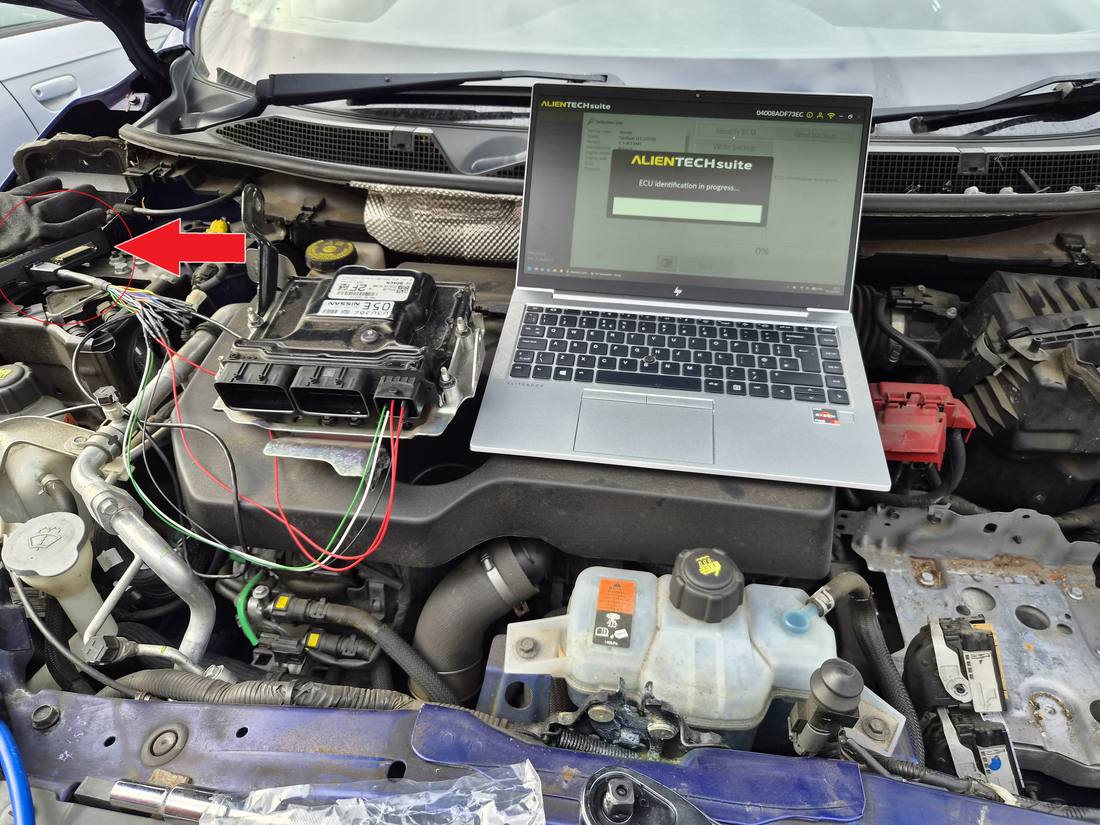
The process is equally easy and complicated. Thankfully when remapping we have a secret weapon. The secret weapon is often referred to as “the tool”. If you look closely at the picture, you can see an arrow pointing to a KESS3 tool.
Tools are manufactured by companies that specialise in working out how to break ECU encryption and read the data on an ECU.
Three ways to read an ECU: OBD, Bench and Boot
There are 3 ways to remap an ECU. We call them OBD, Bench and Boot.
The difference is, OBD simply plugs into your car’s diagnostic port, Bench requires the removal of the ECU and then wires are run directly to the ECU’s pins. Boot on the other hand can be risky as it requires opening the ECU itself. This is done because in some cases, the manufacturers will lock down the communication pins on the ECU or its bootloader. A bootloader is a small bit of code that the ECU runs when it is powered up – this is the moment when new maps can be loaded. Boot tuning bypasses this security completely as the person applying the tune will be connected directly to the board.
Most cars these days are OBD tuneable. However, OBD does have its downsides. In the same way that the ECU has its security, so does OBD. This makes it slow.
Reading and decrypting the data
So, the first port of call is to work out which method is required to connect to the vehicle. Once that has been established, it’s time to connect.
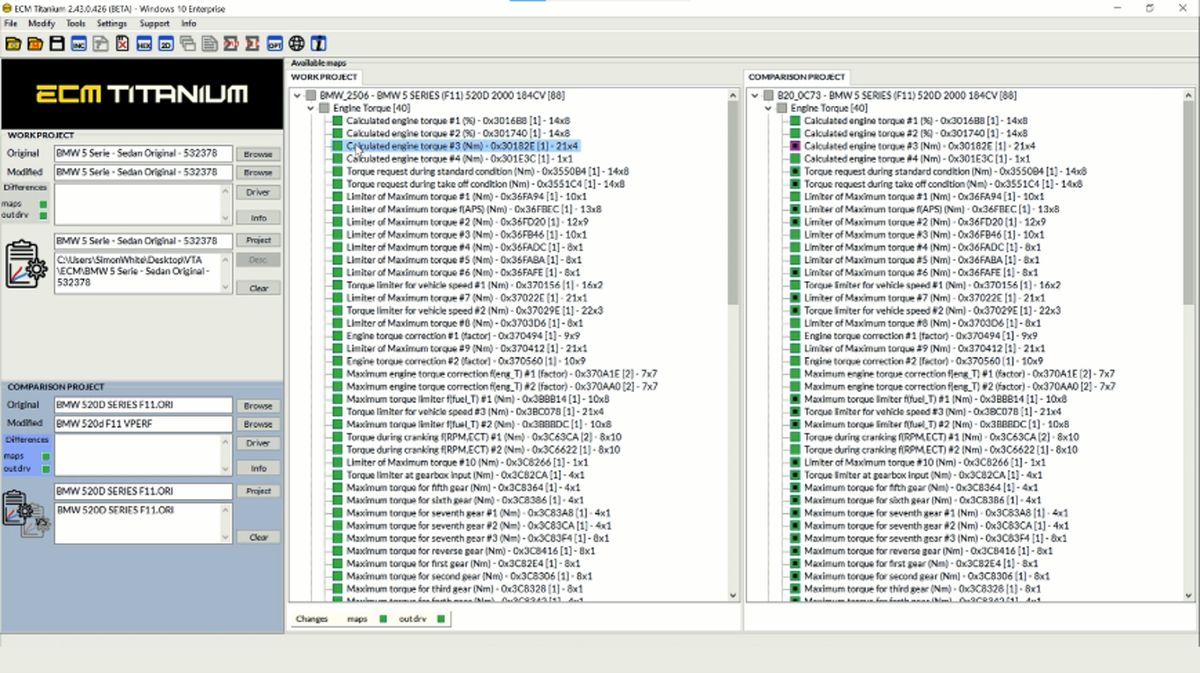
Using OBD as the example.
First up is the read. This is the process of downloading all the maps from the ECU. All of them and there are hundreds, in some cases thousands, of maps and, they don’t all relate to engine power delivery. They cover everything from limp modes, to alternator charging maps…… they’re also encrypted.
Now we have all the encrypted maps, they are decrypted in a very special bit of software, that is designed to turn all this data into something you can read. This is usually something like WinOLS, Stage X or, Titanium ECM.
Finding what the manufacturer left on the table
Once the data is opened, the search can begin inside these maps for the hidden gems that the manufacturer left in there. A great example of this is Audi’s supercharged 3.0 V6. The one that’s in the S4 and S5. It’s not a coincidence that they make more power than the same engine in the A6 3.0 TFSI. It’s because the maps are different. BMW did it too. The F21 1 series. You could get a 116d, 118d and 120d. All have the exact same 2.0TD engine, but they have different power outputs. Why? Because they are mapped differently.
I digress…. So, we have the data and can read it, now the values are changed. We go looking for what the manufacturer has already allowed for. So, you might find for example, the Focus ST already has a manufacturer’s limit of 500Nm rather than the 387Nm it came from the factory with. Not only will it have those limits, but it will also have the fuel, air, and ignition available to it. So, we take the limits that are already allowed for and use them. This is why stage 1 maps are so safe – because the vehicle manufacturer has already allowed for them.
The art is not overdoing it
The art is, not over doing it. If we allowed for all the torque, all the time, the car would be undrivable. So, it’s increased gradually to allow for around town and low speed driving, then increased as the driving becomes more “spirited”. This also has the added benefit of decreasing fuel consumption at the same time.
Why? Well, when you are stuck driving in, say, a 50mph average speed zone, on a flat road, the engine load is low and you are not asking for any more throttle. But the car knows exactly how much torque it needs. As you now have more torque at lower RPMs, you’ll find that you are using less engine power to make the car move.
Writing the file — the risky bit
So, we have all the information from your ECU and it’s been re-written, now what? Now for the risky bit. Up to this point, unless your ECU is being Boot tuned, there has been zero risk, all that has happened is, the data has been read. Now it’s time to write. If you’ve ever heard of an ECU being bricked, this is when it happened. If the file is corrupted, there is a communication error, or loss of power, there will be problems.
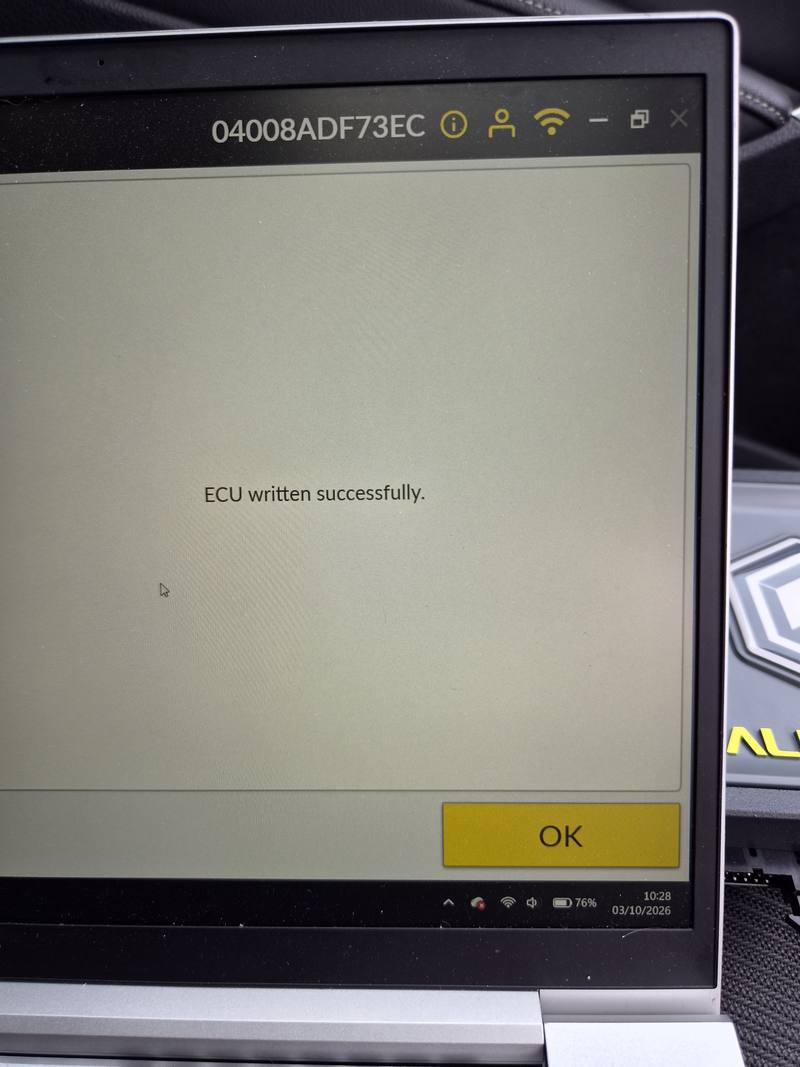
Thankfully, the process is now routine. It’s a bit like heart surgery, it can still kill you, but these days the risks are low. The box that sits between the tool and the car/ECU does its thing. Again, this is not a fast process, because these boxes do a proper job. They check that everything they are writing has been successfully written and then it’s job done.
Everything gets put back together and it’s fun time! The test drive. The effects are instant. There is no learning phase – just instant results.
Can AI write a remap?
A word of warning though. Remember that maps are written for your car? The question we get asked is, can AI do it. The short answer is yes, it can. But AI makes mistakes, and at the bottom of AI chat windows it says as much and tells you that you should check. Going back to heart surgery, would you know how to check if the surgeons were OK, or would you need an opinion from another surgeon? Same thing with tuning ECUs. You also must remember that, AI is only as good as the information it is given. Well, newsflash, tools and car manufacturers don’t publish the information, they don’t tell you what maps to change. So how is AI supposed to know? People forget that AI must be trained on hundreds of thousands of data points before it can do something right. So, before you commit ask the company mapping your vehicle how they do their maps and how long it takes. If they say they can prep your file in 10 minutes, or they turn up with one ready to load – walk away.
How we do our maps
Well, that’s simple. We take the less risky route. We use a file provider. We do the read, download the data, and send it off to a file provider that specialises in writing these tunes. All of them are developed on a dyno and, each one is hand written using the information supplied from your ECU. So, nothing generic, just a tailor-made map to suit your vehicle. It takes around 30–60 minutes. There’s no shame in it and we’re proud to be supported by one of the world’s largest and most prestigious file providers.


So, if you want your car mapping, give us a shout!
I come to you, anywhere in Hampshire. Stage 1 ECU remapping from £250, with your original file saved and a 30-day guarantee on the map.